A New MVC is Emerging
Overview
How AI and protocols are reshaping the classic Model-View-Controller pattern
Notes
Traditional MVC separated data, UI, and logic. AI and decentralized protocols are shifting this toward dynamic, agent-orchestrated, distributed systems.
The old MVC
The pattern we’ve used for decades assumed:
- Models were databases you controlled
- Views were screens you designed
- Controllers were logic you wrote
Everything was monolithic. Data lived in your app. UI was bespoke. Logic was deterministic.
The new MVC
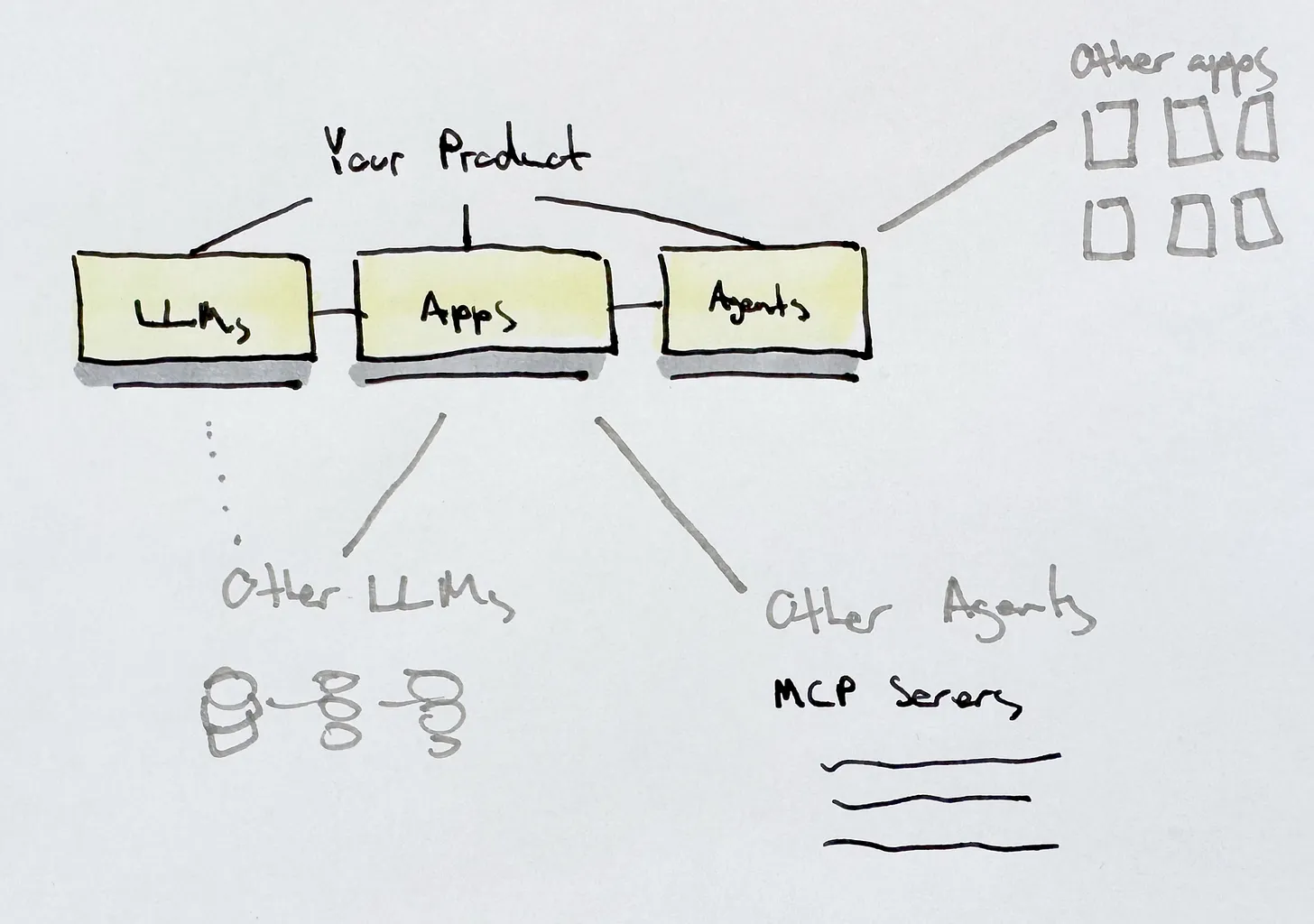
LLMs as Models — Probabilistic, continuously trained systems. “Grown, not built.” Models expand beyond a single datasource into LLMs, APIs, external datasets, and federated data. Users may choose models, build their own, or bring their own dataset.
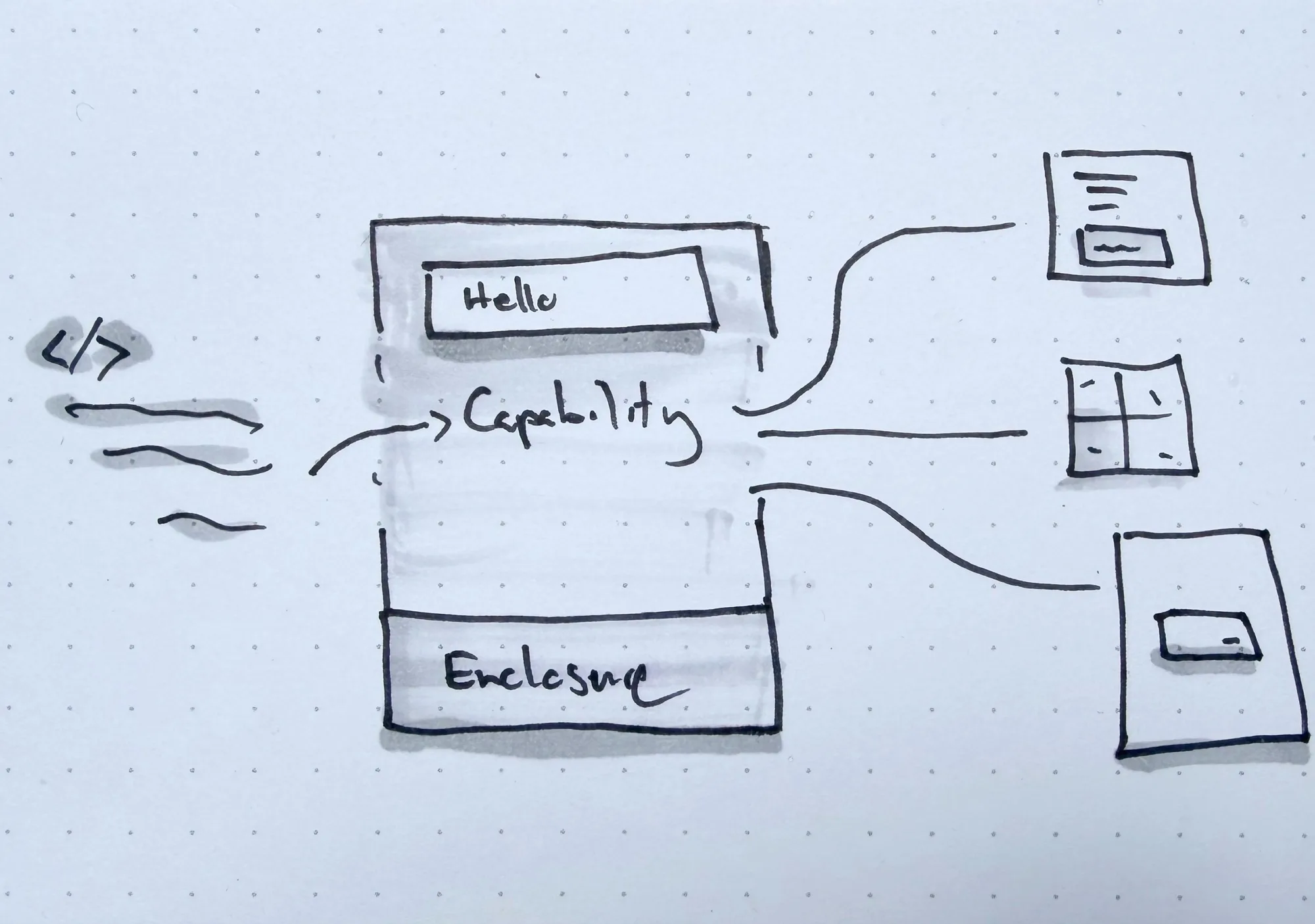
Apps as Views — UI layers that render, query, and pass data. Portability over storage. Interoperability by design. The “view” becomes less about fixed screens and more about interface surfaces spanning devices and contexts. Views adapt not only in layout but in function.
Agents as Controllers — Interpret, plan, and coordinate actions across systems via protocols like MCP. Real-time context switching. Interaction is no longer exclusively initiated by the user. The controller mediates between human intent, model capability, and interface behavior.
What this means
- Shift from app-centric to system-centric product experiences
- Managing endpoints, protocols, and interactions replaces monolithic codebases
- Vendor lock-in becomes a liability
- AI interfaces act as meta-layers across apps
- Software is decoupling, enabling portability, ownership, and agent-driven orchestration
The controller evolves most dramatically. User input remains ground truth, but AI can propose or execute adjustments. Non-deterministic workflows become the norm.
This note is extracted from my longer essay; the garden companion is Dynamic Interfaces.
Related
What links here
Other notes in the garden that point to this one.
- Dynamic Interfaces — Interfaces that change with context, model output, and intent—not fixed screens
Links
No links listed yet.
Discussion
Loading comments…